Why Did My Perfume Turn Brown? 5 Reasons Your Fragrance Is Changing Color?
Picture this: you reach for your all-time favorite fragrance, anticipating that familiar burst of confidence. But as you hold the glass bottle up to the light, you freeze. The crystal-clear or soft pink liquid you purchased months ago now looks like dark iced tea. Panic sets in. You immediately start typing into your search bar: why did my perfume turn brown? Is it ruined? Is it safe to spray on my skin?
If you have recently noticed your perfume changing color, take a deep breath. You are not alone, and more importantly, you do not necessarily need to throw your expensive bottle in the trash.
The chemistry behind perfumery is complex, living, and highly reactive to its environment. In this comprehensive guide, we are going to break down exactly why does perfume turn dark, explore the science of fragrance degradation, and answer the ultimate question: does perfume expire?
Here are the 5 primary reasons your fragrance has changed color.
The Oxygen Effect
The number one culprit behind a perfume turned brown is a completely natural chemical process called oxidation.
Every time you press down on the atomizer to spray your fragrance, a tiny amount of the liquid leaves the bottle, and a tiny amount of ambient air enters to replace it. This empty space inside the bottle is known as the "headspace." Over weeks, months, and years, the oxygen trapped in this headspace continuously reacts with the fragile aromatic compounds and essential oils inside the perfume.
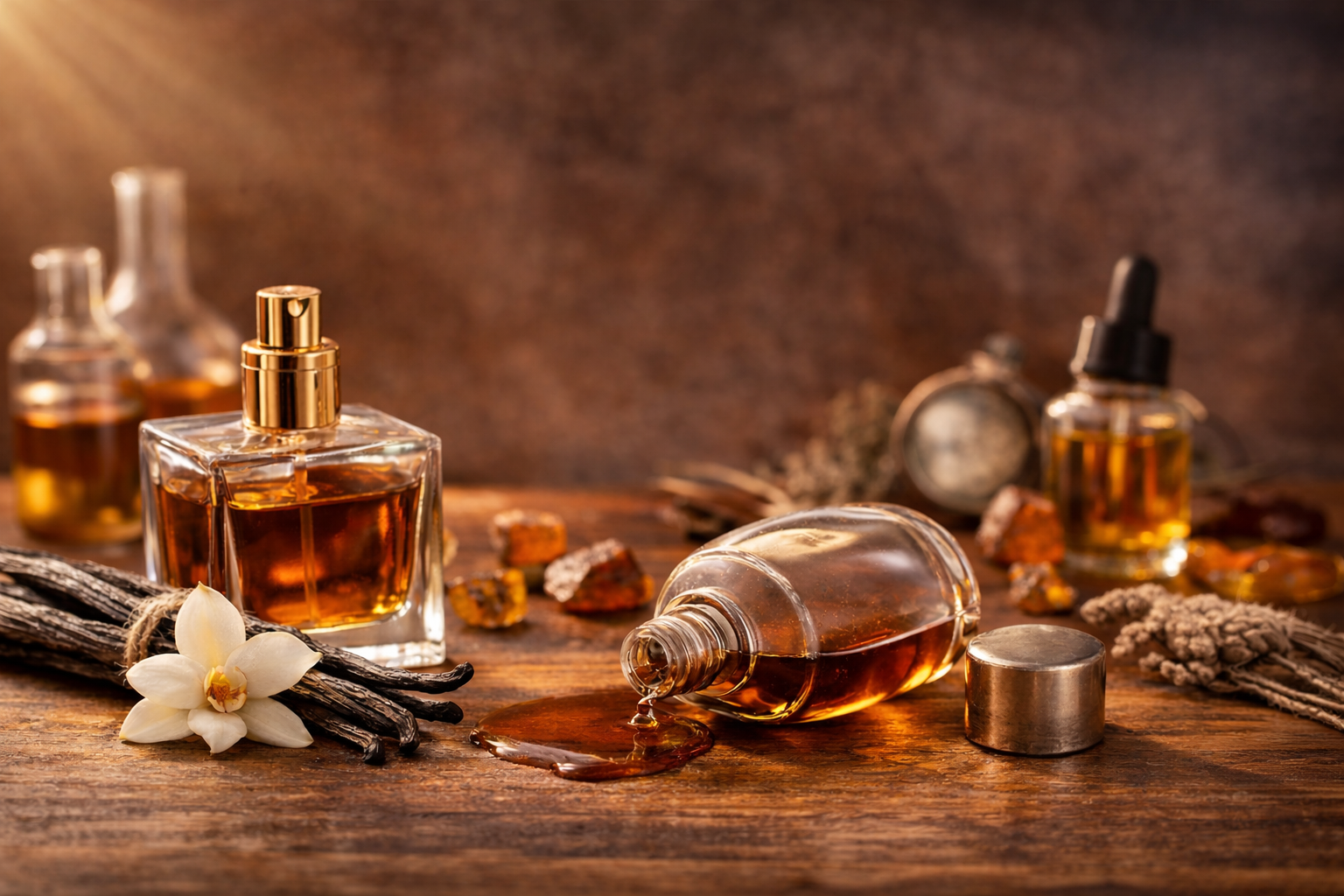
Think of it like slicing an apple and leaving it on the kitchen counter. Within minutes, the flesh of the apple reacts with the oxygen in the air and turns brown. The exact same principle applies to your fragrance, just at a much slower rate. As the liquid oxidizes, the chemical bonds shift, often resulting in a darker, amber, or yellowish tint.
Natural Ingredients (The Vanilla Factor)
Sometimes, the answer to why perfume change color has nothing to do with how you stored it, and everything to do with what is inside the bottle.
Modern perfumery relies on a beautiful blend of synthetic molecules and natural extracts. Certain natural ingredients are notoriously prone to dramatic color shifts as they age. The most famous offender is vanilla (or its synthetic counterpart, vanillin). If your fragrance is a sweet, gourmand scent with heavy vanilla, tonka bean, or benzoin notes, it is almost guaranteed to turn dark brown or deep purple over time.
Other natural ingredients prone to darkening include:
- Jasmine Oil: Often turns a deep reddish-orange or pink hue as it ages.
- Citrus Oils: Bergamot, lemon, and sweet orange can slowly turn yellow or light brown.
- Patchouli: Naturally darkens and becomes richer, thicker, and syrupier over the years.
If your perfume turned dark but still smells incredible, it is highly likely that you are just witnessing the natural evolution of its raw ingredients.
UV Light Exposure (Photodegradation)
Fragrance bottles are often designed like beautiful works of art, tempting us to display them proudly on our bedroom windowsills or brightly lit vanity tables. However, light is one of the absolute worst enemies of fragrance chemistry.
When a clear glass bottle is exposed to direct sunlight, the ultraviolet (UV) rays actively bombard the liquid. These UV rays possess enough energy to literally break apart the molecular bonds of the fragrance oils—a process known as photodegradation.
When these bonds break, they reorganize into entirely new compounds, which rapidly alters the visual appearance of the juice. If your bottle has been sitting in the sun, it will turn brown much faster than a bottle kept in the dark. This is exactly why many premium niche fragrance brands use opaque, black, or heavily tinted glass bottles to protect the delicate oils inside.
Heat and Temperature Fluctuations
If you are storing your signature scent in the bathroom medicine cabinet, you are unintentionally subjecting it to a daily torture chamber.
Bathrooms undergo extreme temperature fluctuations. Every time you take a hot shower, the room fills with intense heat and heavy steam, raising the temperature of your perfume bottle. Once you leave, the room rapidly cools back down. This constant cycle of heating and cooling acts as a catalyst, aggressively speeding up the chemical reactions (like oxidation) happening inside the bottle.
High heat causes the alcohol to evaporate faster and the natural oils to degrade, leading to a darker, murkier liquid. To keep your premium perfumes and designer collections pristine, they must be kept away from radiators, bathroom cabinets, and hot cars.
Maceration (The "Fine Wine" Effect)
Not all color changes are bad! In fact, in the luxury fragrance community, a perfume turned dark is sometimes considered a massive bonus.
Maceration is the process where the various essential oils, alcohol, and distilled water in a perfume marry and blend together over time. Just like a fine wine or a barrel-aged whiskey, many heavy, woody, or oriental fragrances get better, smoother, and vastly more potent as they age.
When you buy a brand-new bottle directly from the factory, the juice might be light, and the scent might feel a bit "sharp." But after sitting in a dark closet for six months, the liquid darkens, and the scent becomes incredibly rich, deep, and long-lasting.
Can Perfume Go Off?
Seeing a color change naturally leads you to question if perfume can go off, and does it expire?
The short answer is yes, perfumes do expire, but they do not spoil in the same way that a carton of milk does. Because perfumes are heavily alcohol-based—which acts as a powerful preservative—they will not become moldy or foster bacteria. Instead, they simply degrade in quality.
While most manufacturers print a shelf life of 3 to 5 years on the box, a well-stored fragrance can easily last 10 to 15 years. You should never throw a fragrance away just because it changed color. Instead, rely on your nose.
How to Tell if Your Perfume is Actually Ruined:
- The Smell Test: Spray it on a piece of paper. If the beautiful opening notes have been replaced by a sharp, sour, metallic, or vinegar-like odor, the perfume has gone bad.
- Skin Irritation: If spraying the darkened perfume causes redness, itching, or a rash on your skin, the chemical breakdown has rendered it unsafe for topical use.
- Cloudiness: If the liquid hasn't just turned brown, but has become milky, cloudy, or has physical sediment floating at the bottom, the ingredients have separated. This means the fragrance has expired.
How to Protect Your Collection?
Now that you know exactly why your favorite scents are shifting in hue, you can take proactive steps to protect your investments. Proper storage is key to fragrance longevity.
- Keep it in the Dark: The easiest way to prevent UV degradation is to keep the bottles inside their original cardboard boxes. If you prefer to unbox, store them inside a dark dresser drawer or a closed wardrobe.
- Keep it Cool: Aim for a room with a stable, consistent temperature (ideally between 60°F and 70°F). Avoid the bathroom at all costs.
- Keep the Cap On: The less oxygen that interacts with the atomizer, the better. Always securely replace the cap immediately after spraying.
If you want to dive deeper into maximizing the lifespan of your scents, check out our expert guide on how to properly store and apply cologne.
FAQs: Perfume Changing Color (10 Common Questions)
1) Is it normal for perfume to turn brown over time?
Yes. In many cases it's normal aging caused by oxidation, ingredient darkening (like vanilla/tonka), or maceration. Color change alone doesn't automatically mean it's ruined.
2) Is it safe to use perfume that has turned brown?
Usually yes—if it still smells normal and doesn't irritate your skin. If you notice a sour/metallic smell, cloudiness, sediment, or skin redness/itching, stop using it.
3) Does perfume expire if it changes color?
Not always. Perfume can change color and still be perfectly usable. "Expired" typically means the scent has degraded noticeably (bad smell, weak performance, or physical separation).
4) Why did my perfume turn brown even though I kept it closed?
Even sealed bottles still contain some air inside, and oxygen can react slowly over time. Heat, sunlight, and temperature swings can speed this up—even if you didn't open it often.
5) Why do vanilla perfumes turn darker than others?
Vanilla (and vanillin), tonka, benzoin, and other resinous notes naturally deepen in color as they age. It's common for gourmand fragrances to go from pale gold to amber/brown.
6) Can sunlight ruin perfume faster?
Yes. UV light can break down fragrance molecules (photodegradation), which can darken the liquid and alter how it smells. A sunny windowsill is one of the fastest ways to degrade a perfume.
7) Can heat make perfume change color?
Absolutely. Heat accelerates chemical reactions like oxidation and can cause faster evaporation of alcohol. Bathrooms, hot cars, and storage near heaters are common culprits.
8) What does it mean if my perfume is cloudy or has sediment?
That's a stronger warning sign than color change. Cloudiness or floating particles can mean separation or breakdown of ingredients. Do the smell test and patch test—if it's off, stop using it.
9) Can darkened perfume stain clothes?
It can—especially oilier, darker juices or heavy vanilla/amber compositions. Spray on skin first, let it dry, and avoid spraying directly on light fabrics.
10) How can I prevent my perfume from turning brown?
Store it in a cool, dark place with stable temperature, keep the cap on, avoid bathroom humidity/heat, and keep bottles out of direct sunlight. Keeping the bottle in its original box helps.
Final Thoughts
The next time you pull a bottle from your shelf and wonder, why did my perfume turn brown? Think of it this way: a color change is simply a visual diary of the fragrance's chemical life. Whether it is the natural darkening of sweet vanilla, the slow introduction of oxygen, or the beautiful aging process of maceration, a darker juice often still has plenty of life left to give.
Of course, all of this is worth monitoring only when you know your bottle is 100% genuine from the start. At Sensa Beauty, every fragrance is sourced from authorized distributors and verified before it ships to you. Read our full Authenticity Guarantee to see exactly how we do it.
Shop Our Best Gourmand & Amber Fragrances
If you are building a collection of rich, long-lasting fragrances — the kind with vanilla, amber, and tonka that age beautifully over time — these are the bottles worth investing in.
 3 sizes
Jean Paul Gaultier
Le Male Elixir EDPVanilla, benzoin & amber — the richest Le Male. 16–20 hours.
🔒 100% Authentic · 📦 Ships in 1 business day
 5 sizes
Versace
Eros Flame EDPAmber, tonka & rose — warm spiced oriental. 12–16 hours.
🔒 100% Authentic · 📦 Ships in 1 business day
 3 sizes
Yves Saint Laurent
La Nuit De L'Homme EDTCardamom, lavender & cedar — the king of date night.
🔒 100% Authentic · 📦 Ships in 1 business day

1 comment
When I wanted to understand the value of certain coins, I began looking for reliable information. That’s
when I came across https://groshi.xyz.
I was looking for accurate information about coin values, and most sources were too general.
On this website I found clear descriptions about coins, their history, and their value. It helped me better understand basic principles of numismatics.
I would recommend taking a look at this site if you’re interested in coin collecting or want reliable information about numismatics.
Sergio hussy
Leave a comment
This site is protected by hCaptcha and the hCaptcha Privacy Policy and Terms of Service apply.